
Our model
The WholeHealth Model
A map of how every part of health connects, and a consistent, practical way to create it.
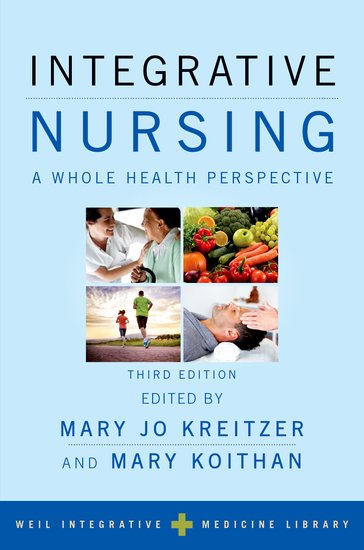 Published by Oxford University PressIn Integrative Nursing: A Whole Health Perspective, 3rd edition
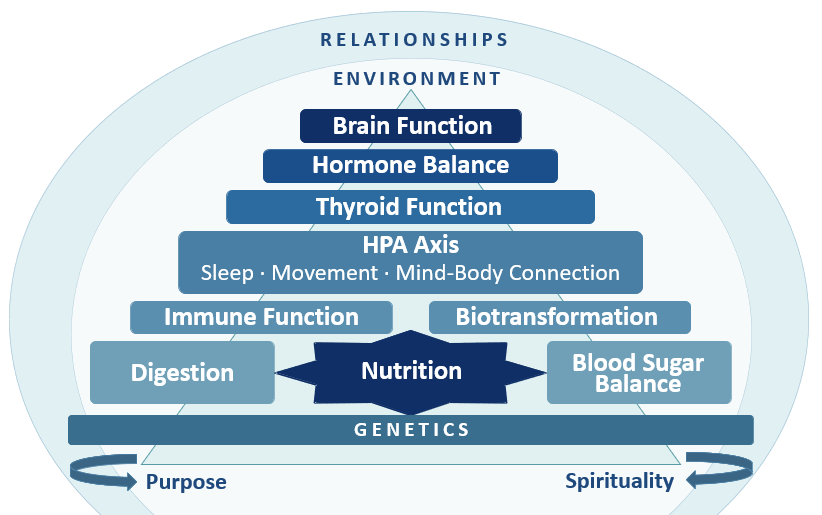

Laura Sandquist, DNP, created the model in 2014.
From a patient tool to a published framework
Laura Sandquist created the WholeHealth Model in 2014 as a visual framework to help patients grasp a whole-person approach rooted in integrative nursing, functional medicine and conventional medicine.
It started as a clinical tool and soon became a teaching resource, training clinicians within major healthcare systems and internationally. Today it’s featured in Integrative Nursing: A Whole Health Perspective from Oxford University Press, part of Andrew Weil’s Integrative Medicine series.
Originally designed for integrative advanced practice nursing, the model is adaptable for every licensed healthcare practitioner.
How the model guides assessment
The WholeHealth approach starts with the patient’s full health story, not just the chief complaint. Tap a level to see how practitioners use it.
The foundations
Digestion, nutrition and blood sugar balance
Assessment usually starts here. Every level above depends on these foundations, so optimizing them lets other systems improve in turn. Practitioners identify and prioritize them using lab testing and other appropriate tools.
Taught in Modules 2, 3 and 4 of the Foundations Course
The integrative nursing principles behind it
- 1Human beings are whole systems inseparable from and influenced by environments.
- 2Human beings have an innate capacity for healing and wellbeing.
- 3Care should be person-centered and relationship-based.
- 4Nature has healing and restorative properties that contribute to health and wellbeing.
- 5Practice must be informed by evidence and use a full range of conventional and integrative approaches, employing the least intensive intervention possible depending on the need and context.
- 6The health and wellbeing of caregivers matters as well as those they serve.

Read more
Integrative Nursing: A Whole Health Perspective
Third edition, edited by Mary Jo Kreitzer and Mary Koithan. Oxford University Press, Weil Integrative Medicine Library. The model and the principles that support it are covered in depth.
Learn to use the model with your patients.
The Foundations Course teaches the model level by level, with the tools to apply it in a real visit.